This is part 8 of 8 of The Singing Ape
8
Storms of the land are not like storms of the sea.
If you’ve been out too far perhaps you have seen how the ocean waters reach up into air and the sky pours its waters down, and the wind whips the world into froth, from above, from below, from beside – and you, unlucky to be in the middle, you are scrubbed from every direction like a radish about to be sliced.
Where the land is very low and very flat, where the land is merely a saucer holding a spill of ocean, little more than a sandbar with groves — in Florida — a storm can feel like drowning in air.
Another wave of rain pressed thru the Fruit Forest, a dark gray arm waving across the sky, dismissing sunlight and casting water in sheets down onto the saturated sand. Rain, rain, go away, come again another day, Vivienne’s grandmother from Florida used to say. That and, call Mickey Mouse and ask Him for a sunny day! Vivienne learned early not to talk of grandmother’s cultish tendencies. Yet always she had been drawn…
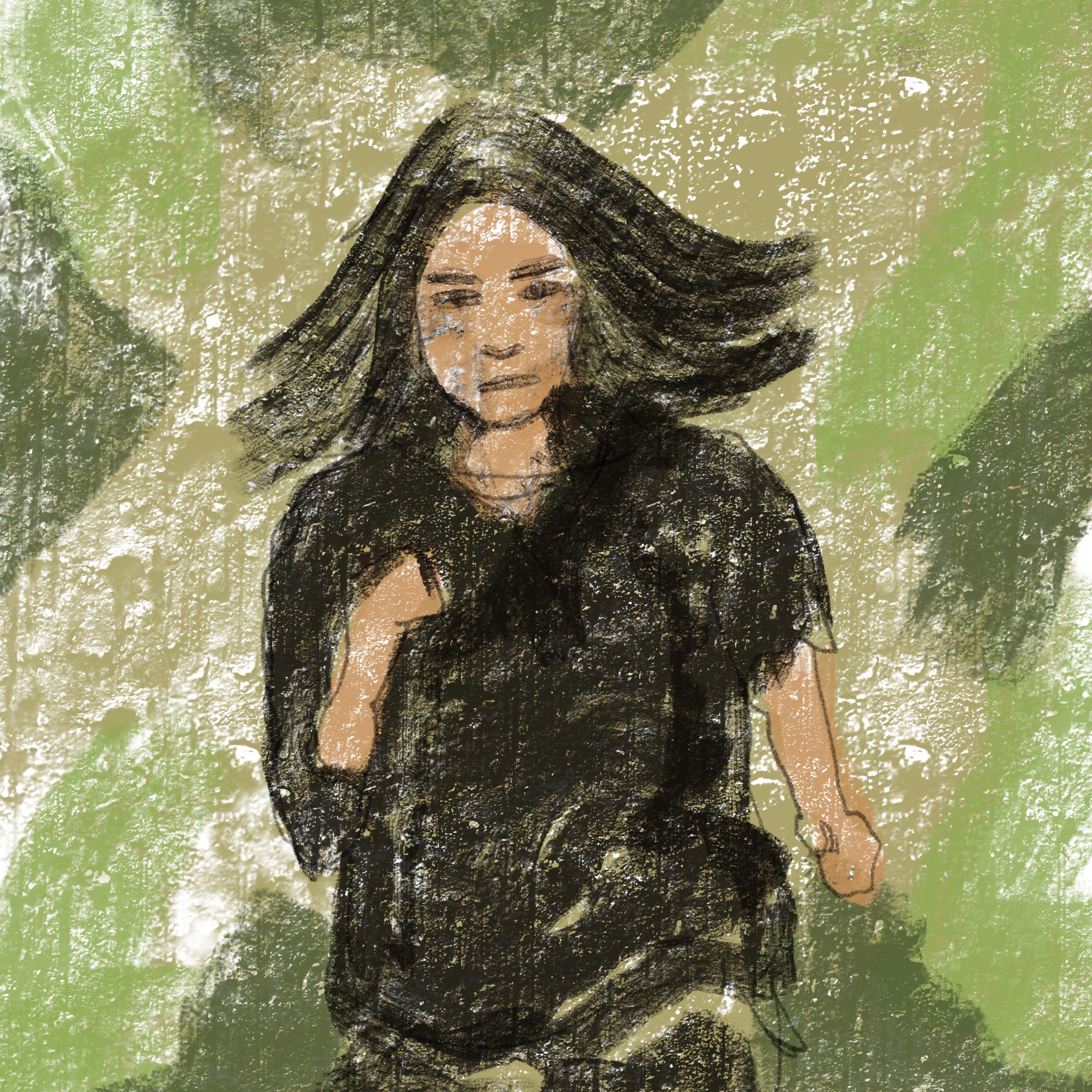
Now, here, in grandmother’s holy land, her students dead, her lover lost, she ran into the wall of the storm, her soaked boots splashing through rising waters over sandy dirt the color of wet ash and packed down around the hard-eroded roots of trees. Despite the treacherous ground she kept her balance and pushed forward. When she came to a fast-running drainage ditch, she jumped into the water and waded downstream, remembering the Jailbreak livplay: how walking through water in that game helped you shake the hounds.
The Jailbreak livplay focused mostly on eluding and disguising, and on finding food to eat, but it allowed for improvisation. Vivienne had two affairs while playing that game, and once set out on a heinous crime spree, which meant she lost, but it was still the most fun way to play. Winning isn’t everything, was another thing grandmother would say. You win and your prize is you suffer the most. Vivienne always suspected grandmother meant Canada. Their country was a winner by default – the rest of the world went to war and they managed to stay out of it.
The world to the south knew death, pain, loss, and ruin, but Canada remained the odd paradise of silent people retreated into digital worlds, their mortal forms protected by cyber-soldiers whose meat came mostly from the desperate survivors of a handful of formerly united “States,” but whose tech came from the geniuses at the Ontario Zoo.
It was better not to think about it. It was better to stay in your games. But grandmother was right, winning was a kind of losing. Every year more and more people volunteer to be permanently installed at the O.Z., where their gray matter could serve as dynamic processors, while their bodies hung like meatpups. Full immersion and possible immortality – now that’s winning.
Yet it seemed to Vivienne like the worst fate of all. And she had a creeping suspicion that her game lives were not much better. A slippery slope? An on-ramp to the Zoo?
The WWII game had violent moments, but it was mostly about networking and long-term, elaborate, cooperative planning. You couldn’t do that in the real world. How would you keep anyone’s attention long enough when everyone’s minds are split by gameworlds? How could you even try when your own mind is split by gameworlds?
Her quest for The Real brought her here. Is this what she wanted? To be hunted like game? To be prey? To want to pray? To the Mouse or some other deity?
She remembered getting her first chip as a child. As the doctor finished the work, a bright red circular rug seemed to appear on the floor. A white, wooden hobby horse and a box of toys seemed to be sitting on it, and above these, a cartoonish blue-glowing window whose light pulsed to attract the eye. As she came nearer, its panes opened, an illusion of curtain seemed to wave in a digital wind, and she saw a brightly colored village under blue skies. Each house or person or dog or bird reacted to her attention and offered a new amusement. “Everything works,” the doctor said, and young Vivienne saw she hadn’t moved, realized she hadn’t felt her feet on the floor. She looked at the chair she hadn’t stood up from. The doctor patted her head. “Enjoy!”
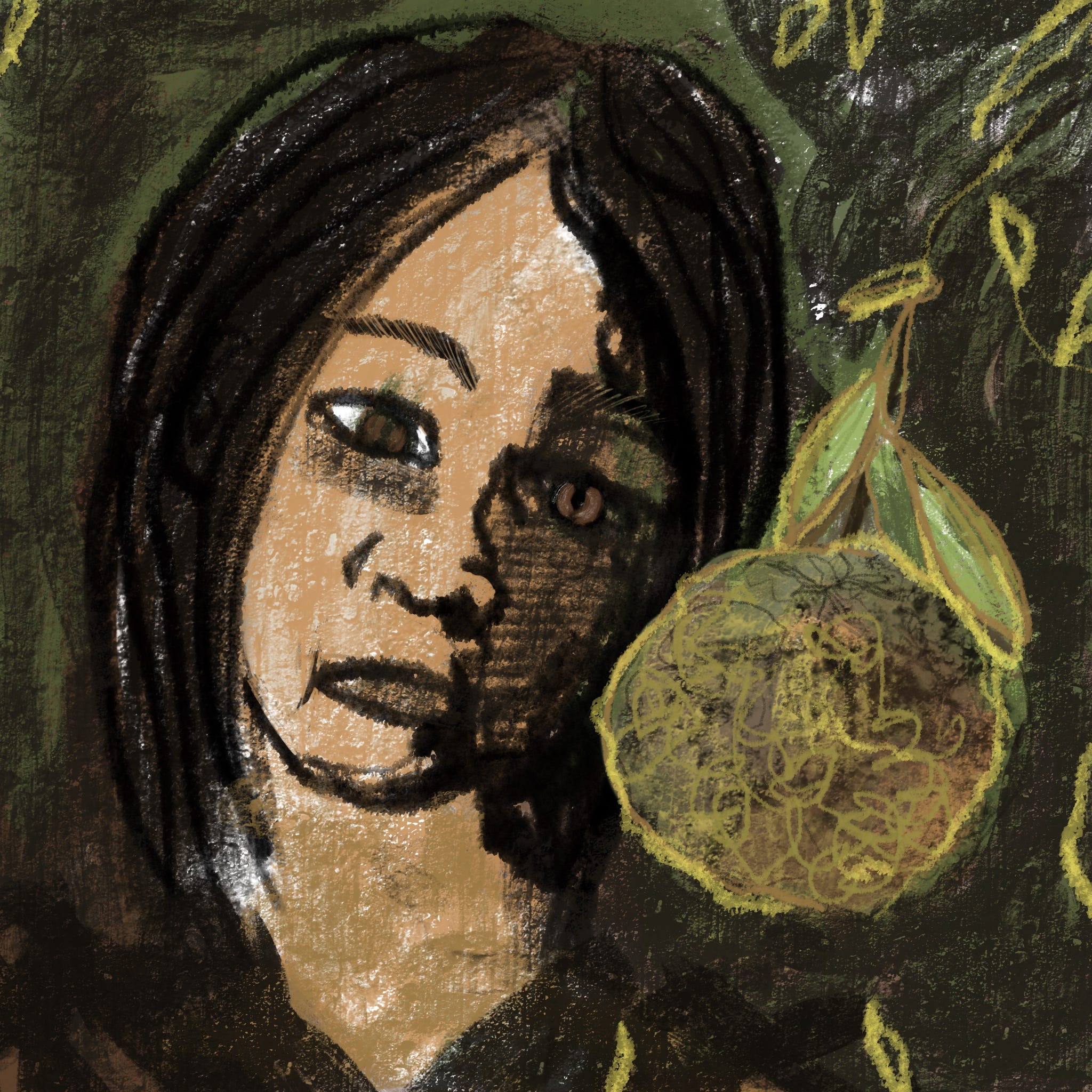
That was decades ago. Vivienne’s now middle-aged face brushed a long branch of a citrus tree, coursing water down to the ground, its leaves broad and waxy. A soft, heavy weight lumped against her right eye, an old grapefruit, half-rotten on the branch. Ants clung to it for life against coursing rainwater. She brushed them away.
She held up the lumpen fruit up like a mirror, reminded of her pockmarked skin, unevenly colored, her wrinkles. Some people change their avatars twice a year, or every few years, or every few days. Vivienne had kept the same face since she was twelve years old. She aged it, a little. She gave it glasses and a more serious expression when she went to college. But she hadn’t really aged it since then. How strange it has been, to be here, so obviously old, so everyone can see, it feels un-real, like a character I am playing.
She thought of her first boyfriend, Justin. She was sixteen when they met. She fell for his avatar’s Asian eyes, its cream-in-coffee complexion, its heavy sheaf of black hair that shimmered blue in sunlight. Justin fell for her avatar’s round purple eyes and yellow-gold waves of hair, its porcelain-white skin. The affair lasted less than two weeks. It ended when he admitted he was not Asian, and she admitted she was. It took her years to understand why this was the end of them – her own orientalism and self-loathing were unimaginable to her when she was young. But you have enough affairs, even digital ones, and patterns will etch too deep and clear to deny.
Vivienne stopped and tried to get her bearings. The sky was booming and water was air. Her hair was plastered down over her face and ears and she could barely open her eyes against the weight of rain. One end of the sky was darker gray: East. The City of Towers lay beyond that darkness. When first she ran, she expected Pete to be directly behind her. When he wasn’t, she expected he would catch up. When he didn’t, she accepted that she would return to the City of Towers alone, if she were to survive at all, and that, once there, she would have to tell a story no one would believe.
The psych eval before the trip: Vivienne gave the doctor a grinning wave, “of course you’re real, you know what I mean,” intending a compliment, intending a connection. The doctor asked sternly, “what makes you think I’m real?” Her friendliness was taken too literally. Confidence in “reality” is often a sign that you’re slipping. Accepting all that cannot be known is “mental health.” Her next words were careful: “I just mean I like you. But I know you could be anyone, including an AI. But it’s none of my business who and what you are, any more than it’s your business what my physical body looks like, or where that body lives.” She watched the psychologist avatar smile and nod.
Vivienne stared down the darkest part of the sky as though to memorize its position, and started stomping through the water again. She wondered if she would be lost in this forest for hours, days, or longer. She wondered if that creature would follow her. She wondered if she would hear it, if there would be any advanced warning at all, if she would know. Or if all would just stop, a blackout from which one never wakes up.
The government required the psych evals because so many people break down when they disconnect. Aspects of what they considered their personality disappear: memory, intelligence, empathy, intuition. When they return, they are often preoccupied with figuring out what is “real.” Some join Luddite colonies and Anarchist cells. Many come back and go to the Zoo, choosing to submerge their consciousness in complete fantasy rather than contend with the ambiguous “real.”
Vivienne told the psychologist avatar, “I’ve been off the ConneX before, and I am fine. I was one of the people hit by the Anarchist attack in Toronto last year, the day before my 40th birthday. The ConneX was out for almost an hour. I was in my lab. I couldn’t get into my games, and that was annoying. Mostly I remember how quiet it was. The news was silenced. The pop station silenced. The celeb chatter silenced. The friend feed silenced. I could hear my gorillas breathing. I could hear my own heart beat. I saw how plain my desk and chair were, without their skins. I found small cracks in my office wall. Near the window, ants crawled back and forth through a small hole. Some carried crumbs. One carried a dead friend. The world was not stimulating. It was just the world. Time seemed to slow down. It was dirty and smells were stronger.”
All of this was true. But she did not tell the psychologist that she’d seen all that in just the first few minutes, and then left her office. That she’d walked several blocks to find an area still connected, wanting to re-connect, not upset or disturbed, just annoyed, disappointed, frustrated, but she couldn’t: even in an area that still had service, her link had been disrupted.
And wandering around there, off-ConneX but surrounded by people who were on it, she saw something otherwordly and strange: humans shuffling down filthy streets wearing blank stares and tattered clothing. On the ConneX, she would have seen expressive avatars with gaits that bounce and dance, outfits flashing slogans, glittering sidewalks, shining towers, bodies emanating emoji signals, music, and memes. If she’d switched on her custom settings, she might see a Medieval village with dragons soaring overhead, or an undersea “Atlantis” whose citizens swim from place to place with their glittering fish-tails, or a wild west, or a tropical beach, or a ship full of pirates, their slogans and memes re-written in pirate-speak.
Instead she just saw these people-shaped things, silent and walking, their faces emotionless or jerking in strange unexplainable grimaces, all off in their own worlds.
She was old enough to remember when public skins were the only option. People and places posted an image or avatar, and your chip would read it and you’d see it. Some shops would change their look every day or hour. Some shops started running their skins on a continuous loop, a new look every few seconds. But then TruVision added a monthly fee option where you could override the chaos of everyone’s skins for one single theme. You’d still see their ads and products, but it would be embedded in a consistent world-view: an ancient black-and-white TV sitcom, or cartoon comedy cave-men, or ancient Rome, or in a lot of cases, just the view that the user considered “normal.”
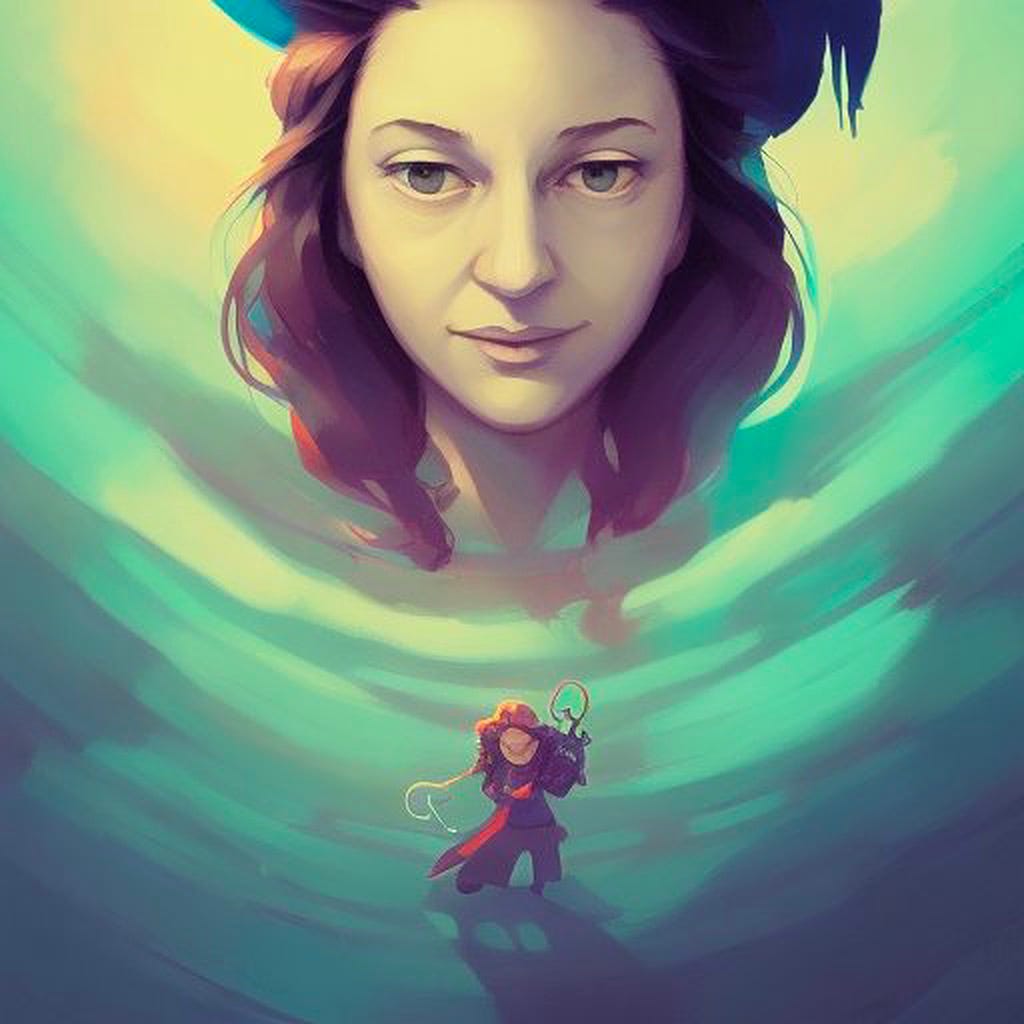
The old way was such a headache, and the fees for universal skin overrides weren’t too bad, so most people bought in right away. All the other VSPs followed suit, and soon, Vivienne felt a vague but pervasive disturbance, a sense that life on Earth had fundamentally changed: people in the same place no longer saw the same thing. If Vivienne talked to another person about her mermaid tail, they heard her talking about her six-shooter. When they replied with a six-shooter-relevant comment, she heard a comment about tails. It made everything make more sense, in a way, but people weren’t really talking to each other anymore. They weren’t even talking to the interface. The interface was just helping them talk to themselves.
That was when Vivienne started getting into livplay. In livplay, the people she interacted with might be on the other side of the planet, they might be older or younger than they appeared, but they would hear and see the same things she did. The gameworld, once chosen, was shared and identical from player to player. In this way livplay often seemed more real than reality. More similar to that hour she spent off the ConneX, but not so dull, so creepy, so lonely.
The rain stopped almost at once. It was dark now. Gusts of cooler air came, first as a balm on her over-heated body, but then she began to shiver. Vivienne ducked under the boughs of a large orange tree and stood quietly listening. She smelled something familiar. She stopped and searched towards the trunk of the tree until she saw it in the last gray glow of the day: gorilla shit. Several heaps, mostly older, at least one fairly new. Assuming these apes weren’t slaughtered like the others, a whole troop probably lived nearby.
A stillness came over her – in part this was her training. Encounters with unfamiliar gorillas required calm. Rushing towards a family of gorillas in a panic might terrify them, and terrified apes could hurt or kill a person easily.
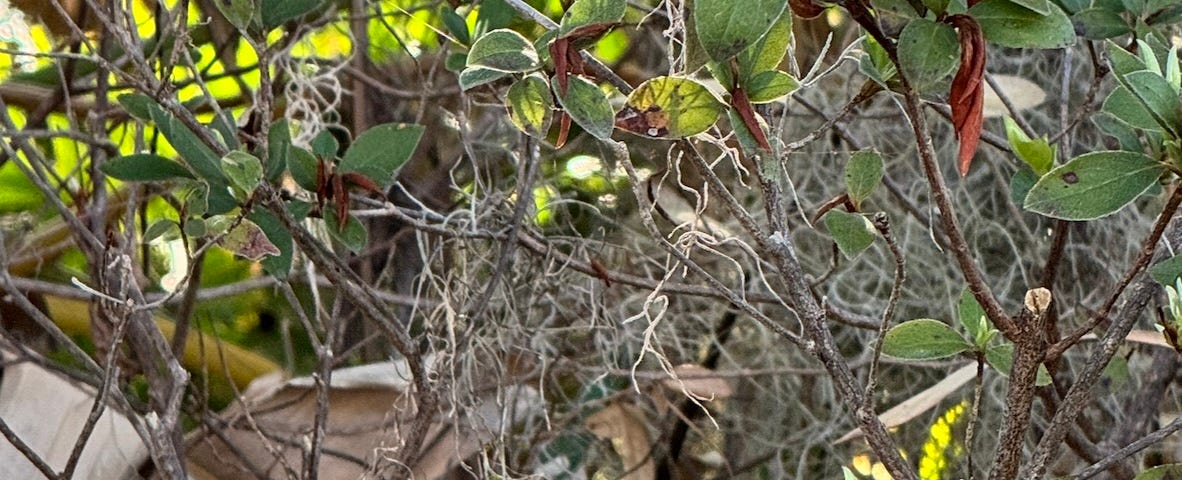
But it wasn’t just her training, it was something else – the heart-stopping attention of anticipation. There were no more wild gorillas in Africa, just a few re-introduced settlements in daily contact with researchers and eco-tourists. The animals she’d worked with in her lab and in other parts of Canada were born in captivity. Her knowledge of the behavior of wild gorillas came mostly from the photos, videos, and field notes of researchers who’d worked 100 years before. Here were animals who had been wild and without human contact since before the war.
Vivienne was a graduate student, just like Pierre and Sofi, when she first heard of the refugee situation in Florida. Of course she’d always been conscious of the distressed region because of her grandmother. In her grandmother’s day, it was a vacation paradise, subtropical and sunny, clean salt air, the viciousness of nature held at bay by human innovation. But the land was flat and supported underneath by a layer of permeable limestone that kept water from rising up through the ground about as well as a sponge.
Her grandmother’s reminiscences aside, for all of Vivienne’s lifetime, Florida was a conflict zone of over-want and over-worth, where the land and sea and air and all its creatures grew more hostile with every passing year: the sun too hot, the waters too high, viral and bacterial dangers multiplied in the flesh of fish and mangoes, while medical care grew impossible to find. Between heat stroke, meningitis, drowning, and rampant crimes of desperation and despair, South Florida developed the shortest life expectancy in North America, the hardest living conditions, and the most difficult trek imaginable – a long slog through waist-deep water and steaming heat, not to mention hostile humans and hungry reptiles – for the people desperate to escape and build a new future in the north, or in another state, or, if they were lucky, in one of the new provinces of ever-expanding Canada. It was hard, then. But it was not war.
By 2067, people with the means to flee the area, like Vivienne’s own grandmother, were long since gone. Those who remained were poor and disconnected, but they had persevered, establishing and protecting communities on the islands that were once higher spots of dry land, and on the raised corridors of the old highways.
In August of that year, a storm came: the hurricane was named “Donald” in the quaint tradition of naming storms like they are people, but despite the common name and the cute tradition, there had been nothing like Donald before. He was a superstorm, filling most of the central Atlantic at his peak, slow-moving and hard-blowing, churning with the ample heat of the heating world. Scientists wondered whether Donald would ever dissipate, or whether he would become a permanent or semi-permanent feature of the Planet Earth, changing the environment irrevocably, affecting human chances for survival everywhere outside the poles.
For the weeks he raged, hovering especially over Florida and the Yucatan, Vivienne’s grandmother watched in a perpetual frenzy of care. Once she told her, “please grandma, you’re 92, maybe you shouldn’t keep up with everything that happens down there, maybe it’s not good for you,” and her grandmother told her, “what really breaks my heart is that no one else seems to care. Disasters are inevitable, but the way we respond to them is not.” Superstorm Donald did dissipate, and sooner than expected, but not before killing tens of thousands and destroying everything in South Florida that remained above the waterline.
Then the refugee crisis began. Wading in filthy waters filled with deadly toxins and venomous creatures, or teetering on broken and makeshift boats, the survivors moved through the unbearable heat, clutching their children and the last fibers of their sanity, and moved north towards the high land north of Okeechobee Bay. The City of Towers officially opened their arms to them, but the forest dwellers called them an “invasion.”
It didn’t help that the storm had been named for the Mouse-worshippers’ god of anger, a uniformed white duck perpetually spitting in frustration and refusal. The refugees were mostly dark-skinned, as were the city leaders; the Mouse-worshippers were mostly light-skinned people who had already self-segregated into tribes. The coming confict only required a spark.
A short, aggressive call. She heard it even through the rain. One gorilla warning off another, perhaps a mature female warning off an annoying child, or perhaps a sign they were aware of her. Had she kept running, she would never have heard it over the sound of her own footfalls and breath. Slowly, quietly, she peeled off most of her clothing and wrung them out. It was a way to be relatively still, but still active enough that she might stop shivering.
She fitted her boots upside down on branches, and draped the wet clothes beside them. She rubbed her near-naked body. Even with this cooler, drier air whipping in, her clothes would not dry easily. So she left them, parting the boughs of the overgrown orange tree to explore.
Vivienne was at a virtual primatology conference when she heard that they were calling it a war now. Her grandmother had been waging a one-woman political campaign to convince the Canadian government to intervene. “This is going to escalate, and people will get hurt!” and of course she was right. The Mouseketeers formed militias and established a second system of “justice” outside of the city. Come the heat of June, they started taking the lives of refugees, in the name of the Mouse. First they appeared to be murders, lynchings at worst or extreme police brutality at best (Vivienne’s grandmother insisted these two were the same thing).
But the Mouseketeers claimed these were legal executions, and then they killed even more people. The refugees and citizens of the city marched against them, at first aiming to take custody of the killers, but then they razed the suburban villages and left human bodies in their wake. It was murder after murder. It was war.
Vivienne kept up with what was going on down there, more or less, but she’d also been busy, helping her professor develop V-chips for chimps, and spending a lot of time performing studies on them. She signed all her grandmother’s petitions and spoke to her AI-MP, and on the one year anniversary of Donald becoming a “superstorm,” Canadian troops arrived in Florida.
Within days, her grandmother’s health declined. It seemed to Vivienne that her concern for the land of her birth and childhood had been all that kept her alive, and now that the conflict was over, she’d collapsed. Whether or not that was true, the conflict was over for Vivienne, because her grandmother died, and the war ended, and aside from a brief report a year later that no one was certain what happened to the local population of wild gorillas during the war, she barely thought of Florida again, not for years.
Another grunt. This time Vivienne sensed its direction and moved slightly towards it, but also slightly to the right. She turned her back to the sound, walking half-backwards. Above her the storm clouds were rapidly moving on, exposing a deep sky full of stars and a bright almost-full moon. When the shape of an adolescent gorilla became barely visible in the corner of her eye, she lowered herself to the ground and sat there, arms draped on knees, her head tilted to one side. She felt the smooth pad of the gorilla’s fingers on her shoulder. It picked up her hair, put it to its mouth, then backed away. When it returned, there was another pair of hands, these much larger. Vivienne stayed still and let them examine her. She was exhilarated and wished that her students were here to experience this, and then she remembered that her students were dead, and that it was her fault, because she brought them to this place, because…
When Sofi first came to work at the lab, Pierre had already been there a year. Sofi came into the gorilla enclosure to introduce herself, and Pierre fell off a log. Literally. Vivienne knew they would be terrible for each other.
And Zuzu. Zuzu was their sharpest young gorilla, and Pierre was her favorite human. He’d been sitting on that log to talk to her. After he fell backwards and stumbled babbling towards Sofi, Zuzu stopped signing, stopped eating. Vivienne transferred her to another primatologist’s lab, where she eventually recovered. Pierre barely noticed. These young females touching her now, sisters or half-sisters certainly, were right around Zuzu’s age when that happened.
These apes were descended from apes like Zuzu, cage-dwellers whose emotions were tied to the alien actions of their human gatekeepers. Gorillas who played video games, knew how to open and close a refrigerator to retrieve chilled fruit, who slept on a bed with springs and bedsheets in air-conditioned rooms, free of pests. When they were abandoned to the natural world, how strange it must have seemed to them: how dull, how difficult, how disappointing, this world full of rotting-fruit trees covered with biting insects, too hot, too wet, and full of dangers.
Or perhaps they embraced it, more interested in freedom than convenience, like the Luddites and Anarchists today, the proud survivors, conquerors of nature’s adversity. And someday, just as the caged apes’ grandchildren are now falling victim to bloody-minded humanity, will the grandchildren of the Luddites and Anarchists be slaughtered by a digital humanity, their heads and hands removed for trophies?
The clouds passed and the stars emerged. Vivienne was grateful that the receding storm and blast of cold northerly air had chased off a good portion of the insects, because she was sitting near-naked and exposed on the wet ground, vulnerable and unable to swat anything away without disturbing the gorillas. After several minutes of touching and sniffing at her, the two of them ran off into the trees, and Vivienne was alone.
She looked at this corner of the Fruit Forest in the bright moonlight. She felt drunk: she needed water, and rest. For water she stood slowly and put her tongue under the tips of leaves, tiny sips. She repeated the gesture over and over, imagining herself a butterfly flitting from flower to flower: laying her tongue, absorbing the droplets of rain collected there, moving on.
And then she heard someone singing La Vie En Rose.
In her daze she thought perhaps if she stayed quiet the creature would never find her. She did not think that its closeness revealed its ability to track her. She thought perhaps it would pass and she would be able to continue her slow trek towards the City of Towers, maybe even having more encounters with wild gorillas along the way.
She did not think of following the adolescents to see if their troop had some suitable shelter. She did not think of searching for more buildings, perhaps tall buildings visible from tree-tops, which even in ruins could provide some shelter or supplies. She did not think of seeking out Pete’s water taxi, which was moored in a tributary of the Sea of Houses not far from their camp. She did not think of returning to the camp to look for weapons or even supplies like food, water, or a tent, which might have helped her survive in the forest longer.
In so many ways, she played this all wrong.

The voice singing La Vie En Rose was getting closer, and with her fear submerged in the haze of exhaustion, Vivienne joined in, singing past the first verse to the second recitative: “des ennuis, des chagrins, s’effacent – heureux, heureux à en mourir,” she said this alone, as the creature listened, having never heard this part before. Usually Vivienne skipped it: “Happy, happy to die,” the song paused to say. She usually thought it was too embarrassingly over-dramatic to include.
The creature was here now. Vivienne beheld the stranger, her eyes focusing as best they could. Bradidiah had called her a witch: perhaps, Vivienne thought, if a witch is a woman sewn up with armor until she might be mistaken for a great pink ape, une gorille rose, but no, with her wobbling consciousness Vivienne saw this was simply a soldier in scar tissue, a sort of cyborg she had glimpsed before, once, decades ago, before everything in the world was covered up in avatars, before augmented humans blended in by means of augmented reality.
Vivienne closed her eyes and fell into the arms of the soldier, an embrace of defeat. She welcomed death, she hummed sweetly to her, because she knew that no matter how many people the cyborg killed, the creature did not kill Sofi, that was her, that was Vivienne, and she could not live with that knowledge, she could not go on remembering the feel of the trigger under her finger, warmed by her skin and slimy with sweat when she pulled it, or the ocean of blood that emerged from Sofi’s neck, or the wet, choking sounds she made so very briefly before she died.
Vivienne saw several young gorillas’ curious faces peeking at them from not far away. They were unafraid of the cyborg and came close – it was clear to Vivienne that they knew her, that the soldier was a friend of the tribe. The broad pink arms drew tighter around her, and with each beat of her heart Vivienne saw the pink insides of her eyes pulse, blood vessels straining, eyes making light, like fireworks bursting. The chorus of curious grunting grew louder, and the nighttime sounds of frogs croaking and gators thumping and birds cooing filled all the space left in her ears. The wind blew and she felt its coolness upon her bare legs, and perhaps merely out of habit, from having died so many times before in games, she would have sworn she saw within the flashing pink light of her eyes the words:
Game Over
Apologies and condolences.
The character linked to your gamerID is no longer
viable within the selected gameworld.
New characters are not currently available.
Please select another livplay experience.
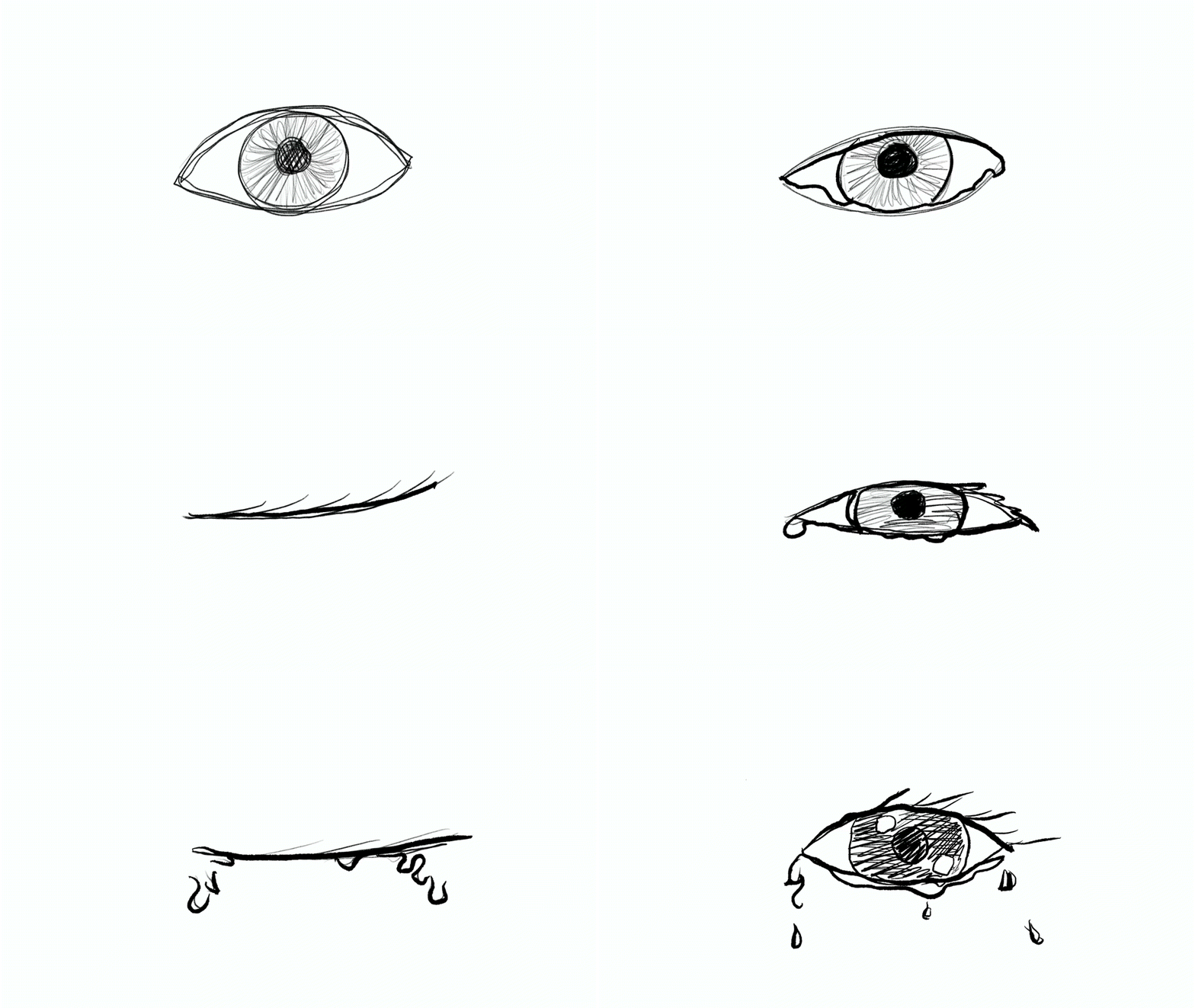
Author’s Note: So ends The Singing Ape, as published on Substack!! I also titled this novella “Humans Aren’t the Only Ape that Sings” for a while, and jeez I wrote it a long time ago now. Years and years. It’s been sitting in the “to do” piles of various publishers for ages, getting returned to me with praise but no contract. Tor alone held onto it for two years, seriously. But I’ve got other stories in the works that are set in the same universe and I just couldn’t keep waiting, so I’ve published this novella here. I’ve enjoyed publishing it this way: it’s given me time to re-read, do a little editing, and of course add some illustrations, which has been fun :) Chapters 6 and 7 don’t have illustrations in part because those sections are so propelled by action that it felt weird to interrupt that flow with a picture. There’s a lot of “discourse” out there about the hobbled/broken/degraded/etc. state of fiction-publishing in this the year of our lord 2026, and I don’t feel the need to add to it except to say that I have read self-published novels and I have enjoyed them. So here’s one more. We’re not trying to move mountains, here, just tell stories, and in telling and reading hopefully uncover something True. It’s a very human endeavor and like all very human endeavors it’s under threat by the systems that have dominated our world and demanded that everything be A Shocking Blast of Scalable Insta-Content! But there’s nothing tweetable or tiktokable about what I do. Either you join me for the journey across the terrain of typed words, or you don’t. Either way, it’s been a pleasure, and now I feel more free to move on to other projects. Thank you for reading! :)