

This is part 2 of 8 of The Singing Ape
2
Sofi lifted and aimed her rifle at a large fan-like leaf swinging over the professor’s tent. She squeezed at the trigger but the safety was on. She said “pkew!” and jerked the gun up to imitate the firing kick. When she was fourteen she started playing a vigilante named “d’Raven” in the ultraviolent livplay Perpworld, a chaotic game with unlimited access and no ending date or story arc. In the game she was a top shot who almost never missed. But that meant nothing here. Her real-life muscles had no more memory of her 10,014 kills than of her 203 deaths. And without access to the Global ConneX, she couldn’t even access basic weaponry or tactical knowledge. Her mind asked questions, and the vast absence gave no reply. If she thought about it, the silence where stimulation should be sounded to her like death. And so she did not think about it.
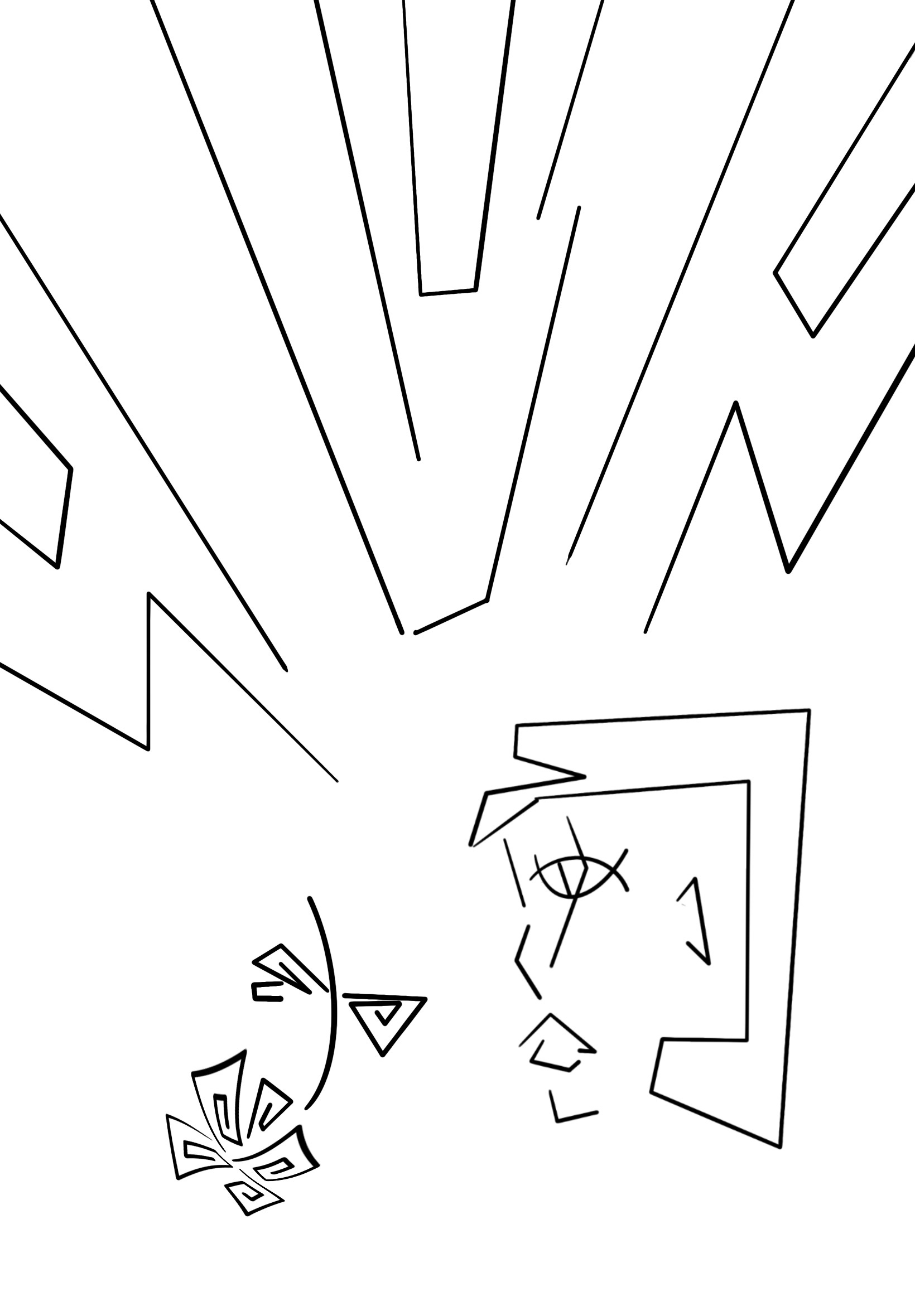
She knew they would have no connection in the Fruit Forest, and she’d dreaded it, but she’d thought mainly about missing out on games and updates from friends. What surprised her was how it affected her vision, how without the ConneX she felt partially blinded. With her two eyes she mustered a superficial 3D rendering of the visible space in front of her — nothing more. Back home, or almost anywhere else on civilized Earth, the data stream colored in all the details, information arising from the back of her mind like an intuitive sense of what lay in every direction: the dangers, curiosities, opportunities, attractions. But here she felt like she had a sack over her head. Or was trapped in a distantly budding bubble on a tenuous, thin-stretched arm, far from the amorphous human mass, just her and a dubious stage set, no external data to confirm its existence, or hers. She’d lost the most complete and important sense her body possessed. Severed from the ConneX, a strange new tension flashed from her brainstem like a blinking cursor awaiting a prompt. It was a disturbing, extreme experience. Her adrenaline pounded, her skin was on fire. It was what she’d been searching for all her life.
She re-aimed.
“You scare me when you practice so much, Fifi,” Pierre said. “We’re not in your Perpworld where you can kill and die and everyone comes back for more.”
Sofi did not look up. “You scare me when you don’t practice, Pierre. I do not intend to be killed.”
“Raped,” Skip said. He was stepping back and forth near the path like he had to pee. Every few seconds he twitched a shrug, as though the sweat in his armpits surprised him. “During the war, the man who killed my mother raped her with a knife and left her to bleed to death from her vagina.”
Sofi tensed her jaw. Skip had survived a real war, and she took his words seriously. Rape was among the few crimes not allowed in Perpworld. But here it could happen. Also, here there was pain. In Perpworld only your pride would hurt, when you got outmaneuvered by another player. Show me rape and torture, she asked her mind, I want to prepare myself, but the darkness did not answer. The unseen things were most horrifying of all — she’d never had a fear she couldn’t research into submission. She shuddered.
Pierre strode over to Skip and stage-whispered. “You don’t help by frightening her!”
“At first she screamed, but then she did not, even though she was still alive. I think she was too angry to scream anymore. They enjoyed her pain, and she did not want to give them that satisfaction.” Skip turned and looked at him. “My brother, Pete, was away in the City of Towers. But I saw them kill our mother with my eyes. With these eyes. These eyes that live in my head and look at you now. That was the time of the war. They say gorilla hunters are mostly men from the war. Men who love death, who still want to kill.”
Pierre took a step back. “I am a primatologist!” He threw up his hands to the sky. “A primatologist! Why should a primatologist have to endure these human problems?”
“You are so stupid, Pierre, it depresses me,” Sofi said, then lifted her rifle to practice aiming again.

Chet heard the flapping of wings and looked up to see a raven: it made a bright black shudder in the gray light of the treetops as it touched the branch and gave a soft caw. “Bradidiah,” he said, and gestured upwards with his eyes.
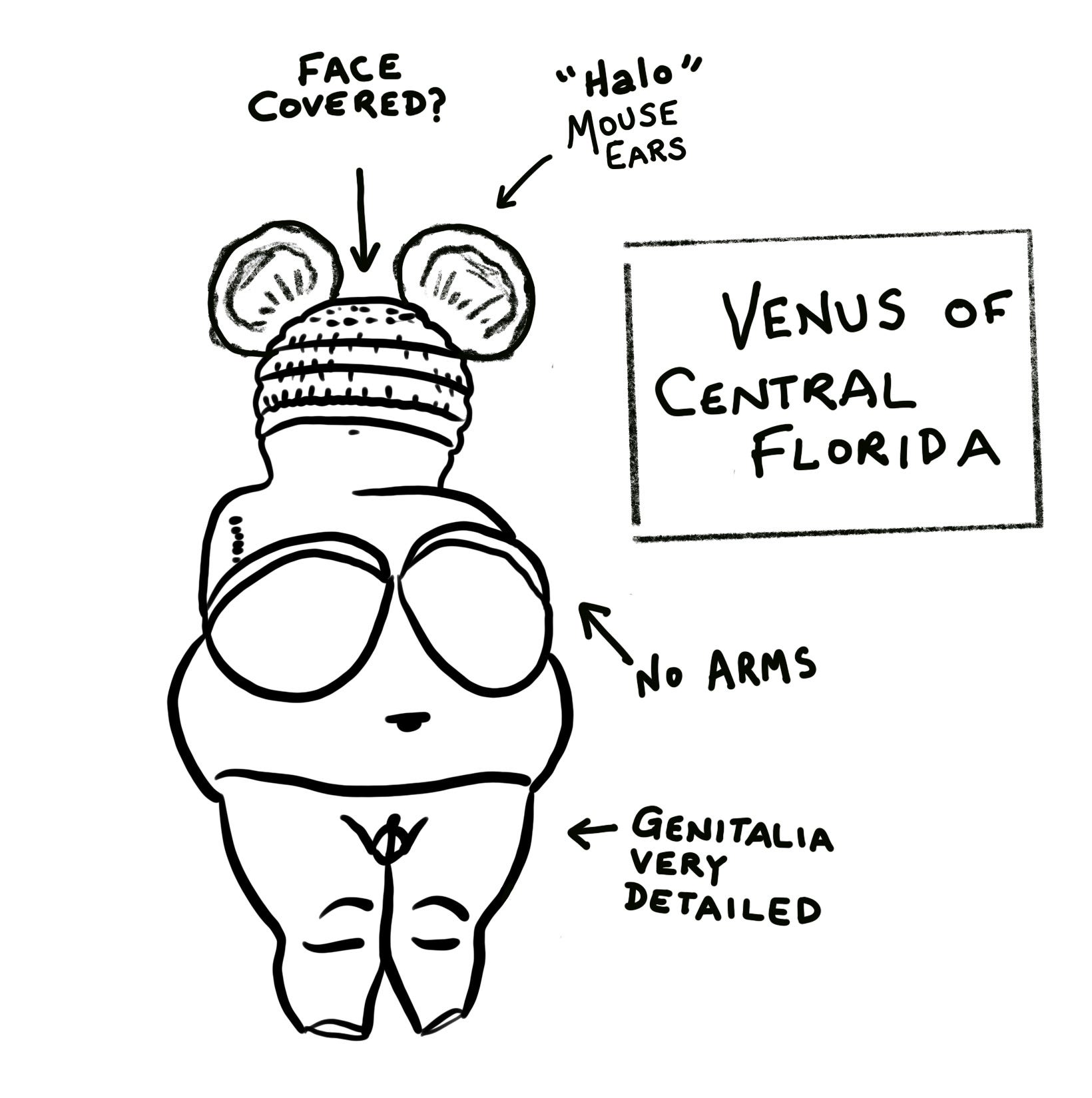
Bradidiah placed his hand over the Mouse at his heart and watched the bird disappear again through a little hole of sky. “They don’t chase me here,” he said in wonder. “For three years every raven I have seen has screamed and swooped down at me. They have come from miles around just to watch me walk from house to house and to rain shit on my head and arms, white streaks of shame.”
“Bradidiah, could it be? Are the demons finally satisfied in their revenge?”
“Demons are never satisfied. Yet I haven’t been attacked since we entered the Fruit Forest,” he said. “I thought perhaps there were no ravens here. But I think now they have been here all along, watching.”
“This one we saw, it was watching. It flew away when I spotted it. Bradidiah, if this is the ravens’ doing, we have walked into a trap.”
“Then you must go back. Their revenge is for me.”
Chet looked back down the path, the way they came. He lifted his chin. “No. We will stay together, in any heat, in days of rain.”
“As long as you travel beside me, you are in danger, as much as me.”
“No, Bradidiah. The demons planted this idea in my head, to kill the gorilla. They tricked me so that I would trick you. Tricked me to trap my best friend!”
“Perhaps, or perhaps the trick began when we heard the woman singing.”
“The witch from the market. You were right about her. She and the ravens are the two hands of the same devil. We will destroy them. Yes, you and me: it is my pride as much as your life. We will destroy them together.”
“Chet don’t be a fool,” Bradidiah said, but he smiled as he said it.
Chet grabbed his friend’s arm. A brave fool is all he’d ever hoped to be. “I will stay, and good will triumph over evil. In a week you will walk the streets back home in peace.”
Bradidiah lifted his hand away and turned. Yes, there it was again, the sound of a woman singing. “Witch or demon, man or beast, what spirit within, what body without, I do not know, but I, whose name is Bradidiah,” he told the singing voice, “will soon pick your flesh from my teeth. I will bathe in your blood and cleanse this curse from me.” His words were little more than a growl, an incantation to himself.
Chet watched his powerful friend in stunned silence.
“Come, Chet, this is the way we must go.”

The professor pushed forward to where she’d heard the humming, so like La Vie En Rose at first, but then it scattered, faded, disappointed her ear.
Pete hurried from behind and grabbed her arm. “Vivienne, stop. Let us return to your young students. Let us make our way back to my water taxi. We will sail back to the City of Towers, all of us. You have collected enough gorilla dung. More of it is not worth our lives.”
“This would be so much simpler with even limited access to the ConneX.”
“Nothing modern works through all the Fruit Forest and across the Sea of Houses.”
“It amazes me, still, that no one knows why!”
“The forest-dwellers think this land is holy, and that technology is evil. The scientists say it is a technology in itself, a counter-measure from the war that has never been turned off, and continues disrupting signals and currents to this day. It is enough for most of my people to say we shouldn’t come here.”
“But you’re different. You and your brother brought us here, sailed us through the Sea of Houses and into the heart of the Fruit Forest the rest of your people fear.”
“That doesn’t mean I don’t fear it. Vivienne, you Canadians have no sense of the money you offer. And we are too needy to tell you. But I will tell you. The fee you’re paying us? That is more money than my brother and I could earn together in a year. How do we say no to you? We can’t. So we risk our lives. But why do you? This is what I don’t understand. Why do you come from your lovely Canada, so rich and safe, so connected and comfortable, so much nicer than even the best avenue of our beautiful city Orlando, to this condemned and cursed old battlefield? The dead zone extends ten thousand feet into the air: low-flying planes drop dead at the border of these skies. Motorized boats slip into slumber as they near this place, and only wake if they drift away. You can’t speak to your loved ones. You can’t play your games. There is nothing here but Nature: regret and anger and vicious animals, some of whom are men.”
“And that makes it one of the few mysteries left in the world. We’ve mapped the deepest ice caves of Antarctica, but we know more about Mars than we do this forest and the wild gorillas who live here. What adventures are there, anymore?”
“You don’t know what you seek! I would give anything for the comforts you avoid.”
“You don’t know what you seek, either, Pete! What looks to you like a prize is in fact a cage.”
“What cage? Your minds roam all of time and space in safety.”
“It’s fantasy, Pete. Fantasy is also a cage.”
Pete fell silent. He thought of the saying among his people, “Ideas are anchors; hard to lift up, easy to throw down.” These outsiders were always above, swinging and tossing their dense metal down at him, while he struggled to push just one thought up to her.
“Pete, how much do you know about World War II?”
“I only have room in my memory for the war I lived. Of the ancient wars I know almost nothing.”
“Well, I know World War II intimately. In the freedom of my fantasy life, in the gameworld, I have lived it. Part of it, like every war, was a genocide. Only this one was better organized than most. They made all the people they wanted to kill come to centralized warehouses, and to bring with them their most valuable possessions. One by one they walked in, lugging the precious things they owned. And there their enemies took their gold and diamonds and anything else, and killed them.”
“Why would they bring their valuables? Why didn’t they bring shit and piss? Why not weapons? Why not venom and bile?”
“This is one of the mysteries. But I think? They believed they would live. Because it’s hard to believe, even when armed soldiers force you from your home, that you’re being taken to die. Because you know how rich and valuable life is, your own life is, I mean, it’s the center of the universe, it’s all existence, right? You can’t imagine anyone would destroy it without reason. And you know they have no reason. Or maybe you always believe, or at least hope, you will live, in the face of anything, or almost anything. I don’t know. That part, Pete, you would know better than me. But that’s not why I’m telling you. I wanted to tell you about the place where they put all the belongings. All the things that belonged to the people they killed. Their shoes and necklaces and eating utensils, the children’s toys and the grandfather’s books and the glasses and girdles and all of it. It was an enormous palace of the stuff of the dead, organized, cataloged, labeled and processed. One lady’s diamond would go in a pile with every lady’s diamond, and all the gold rings would go in another. One little girl’s doll would go in a pile with all the little girls’ dolls. A few of the prisoners were kept alive, and made to do the work of sorting and labeling, while their captors watched.”
Pete’s face fell. “This is the worst thing I have ever heard. To organize the artifacts of your people for your enemy’s use. Monsters.”
“And yet these men felt lucky, happy, because they lived, and because the work was easy.”
“Monsters. Monsters to make a man happy in such a Hell.”
“It was a Hell, but it went by another name. That’s why I wanted to tell you about it, so I could tell you what they called it.”
“What did they call it?”
“Canada.”

About this novella: I wrote The Singing Ape around 2017, and then I sent it around to publishers. You wouldn’t believe how positive the REJECTIONS were. Seriously. So many people enjoyed reading it, yet none of them wanted to publish it. ¯\_(ツ)_/¯ Shruggie says, “I don’t know why.” Anyway, I moved on, I wrote other things — a writer’s gotta write. But I like this story, and it connects (ConneXes?) to others that I’ve written, and so I’m publishing it myself here on Substack as part of Amy’s Electronic Girls (which it definitely is). It has eight parts and I’m publishing one part a week for eight weeks. I hope you enjoy! :)