
🇯🇵 Japan: THE DARK SIDE 👹
Getting to know a little Japanese culture through the very STRANGE and disturbing books of UKETSU!

I have known many Japanophiles, but I have never been one. I don’t have an emotional connection to Pokemon, I’ve never really read manga — I started Akira but it didn’t do much for me -- and the only Studio Ghibli movie I’d seen before 2026 was Ponyo1. Sure, I can inhale a battleship of sushi, and I love a warm saki, but that’s not saying much. I never really imagined I’d ever get to go to Japan, altho I had certainly noticed that everyone I knew who had ever gone to Japan talked about how wonderful it was and how much they loved it.
CocoRosie’s song “Japan” repeats in the chorus that “everybody wants to go to Japan” — and in the decade I’ve had this song on my playlists, when it’s come on, I’ve been like, “yep, that tracks.” But the song, which you may or may not find offensive, is about (if I may get all lit-crit interpretive on you) how wanting is a fool’s paradise, but the only paradise there is is for fools!
WELL MY THOUGHTS ON JAPAN GOT MORE SPECIFIC and more… real? when my husband’s employer asked him to work in Japan for 3 weeks. Not only was I thrilled for him and his new adventure, I was inspired to hop on, like a baby alligator on a turtle’s back! Hey, hubs, if YOU’RE going to Japan for three weeks, surely the kids and I should go visit you for at least ONE of them? :D We decided in the end that it would be better to tack our one week visit on the END of his work obligation — so he’ll actually be in Japan 4 weeks, and the last week will be a family visit.
All of a sudden I realized I would be a guest in a country that I knew nothing about!! I needed to learn phrases! Customs! Cultural quirks! Stat!
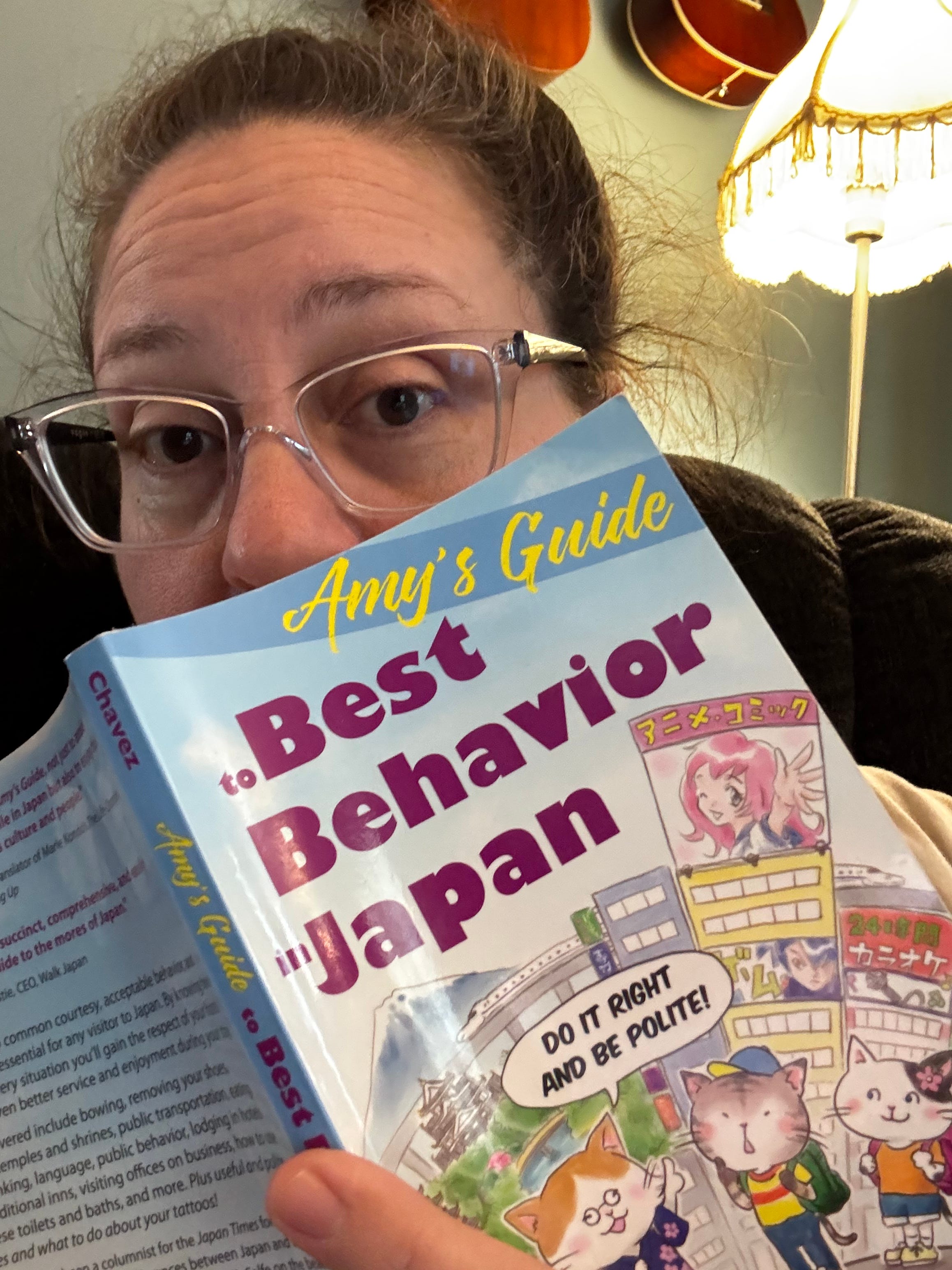
Culture, however, is more than just a list of etiquette rules. Sumimasen and Arigatō gozaimasu are important, the DOs and DON’Ts are important, but I wanted to have a sense of Japanese culture, the mindset, the worldview, the base reality — and not just of ancient Japanese culture, but of the world of today. So I started googling for recent bestselling novels in Japan that have been translated into English.
That is how I found STRANGE PICTURES.
The author of this novel is UKETSU, a mysterious (and surrealist?) YouTuber who wears a creepy mask and uses voice distortion to make himself sound like a little girl.
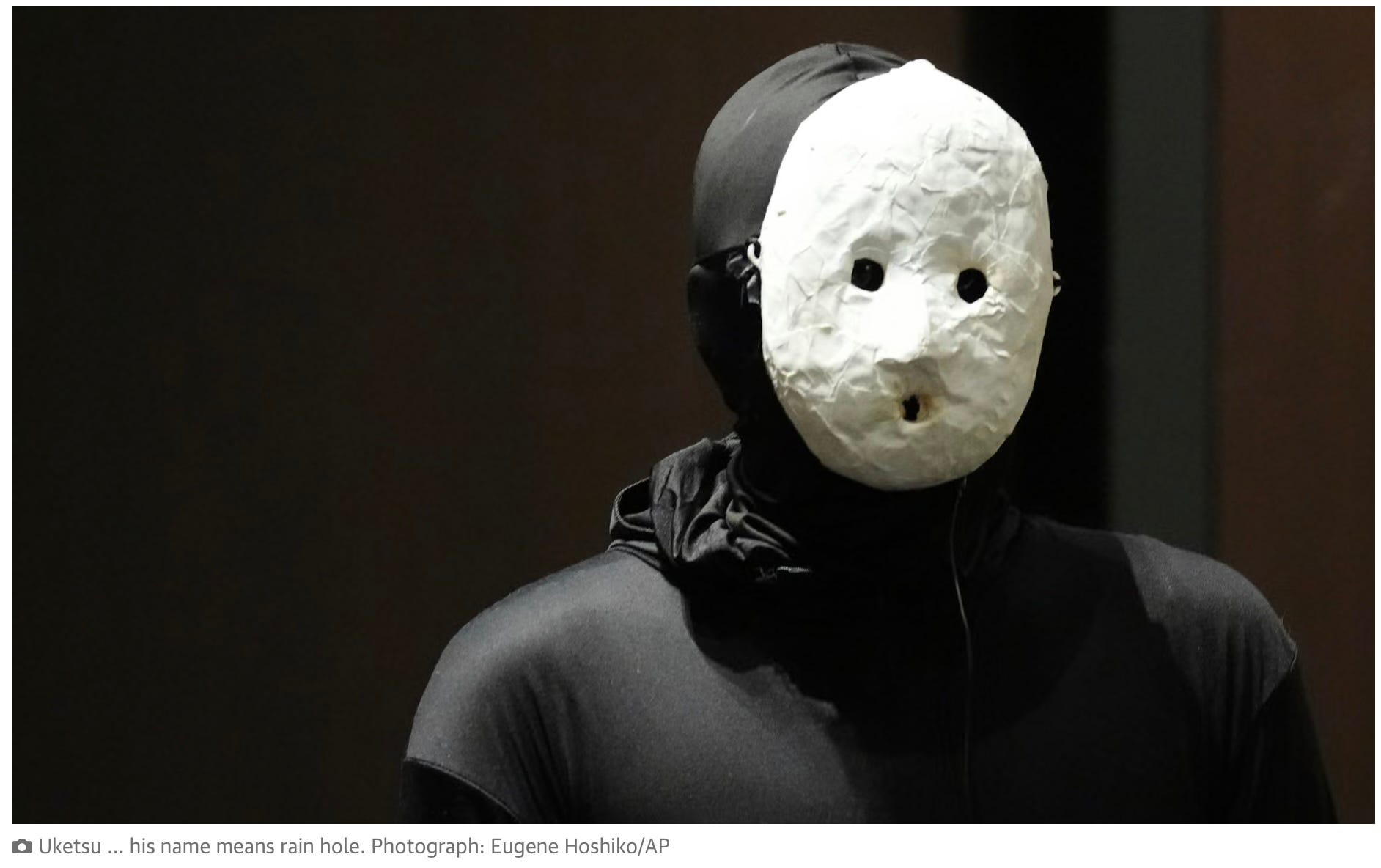
I suppose that should be enough to warn you that the book will be weird. But I doubt that it prepares you enough.
OH and let me make clear that — probably more so than any other book I’ve reviewed here — I RECOMMEND THIS BOOK FOR EVERYONE. Young and old, edgy and conventional, big time readers and hardly-ever readers — I have already given or recommended this book to all of them and ALL of them have enjoyed it. The young and the “hardly ever readers” in particular have gushed about how once they started the first page they COULD NOT PUT IT DOWN.
In part, the book walks you thru a series of puzzles — pictures, strange ones — that were ostensibly left online, like little bits of informational residue abandoned on old blog. The story then takes you into terror and darkness.
It’s psychologically thrilling, but there is only ONE scene I would characterize as “horror” — a scene in which a person investigating a murder is murdered in the exact mysterious way that they had, up to that moment, been unable to figure out — and so revelation comes only with the nightmare of it being repeated on yourself.
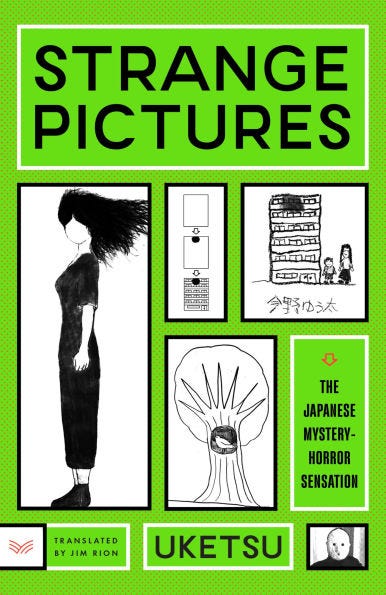
But I get ahead of myself — it’s the puzzles that draw you in. It’s the questions that those puzzles raise. It’s the characters who are encountering the evidence and trying to make sense of it. Sometimes they’re very wrong, sometimes they make wild guesses that seem plausible and then a few chapters later come back to explain to you why you should have seen right thru their version of events!
It’s a book about making sense of strange stuff that doesn’t seem to add up — and about how the most ordinary surfaces, the most “conventional appearances,” can disguise primal acts of vicious rage and cruelty — and shows how the origins of that rage and cruelty are… the most ordinary surfaces, conventional affect.
The human mind is drawn to pattern-seeking and puzzle-solving, especially when it comes to patterns about how people behave and what their behavior means. And so this book is irresistible.
But then there’s more: STRANGE PICTURES is followed by a sequel, STRANGE HOUSES. And it too is followed by a sequel, STRANGE BUILDINGS.
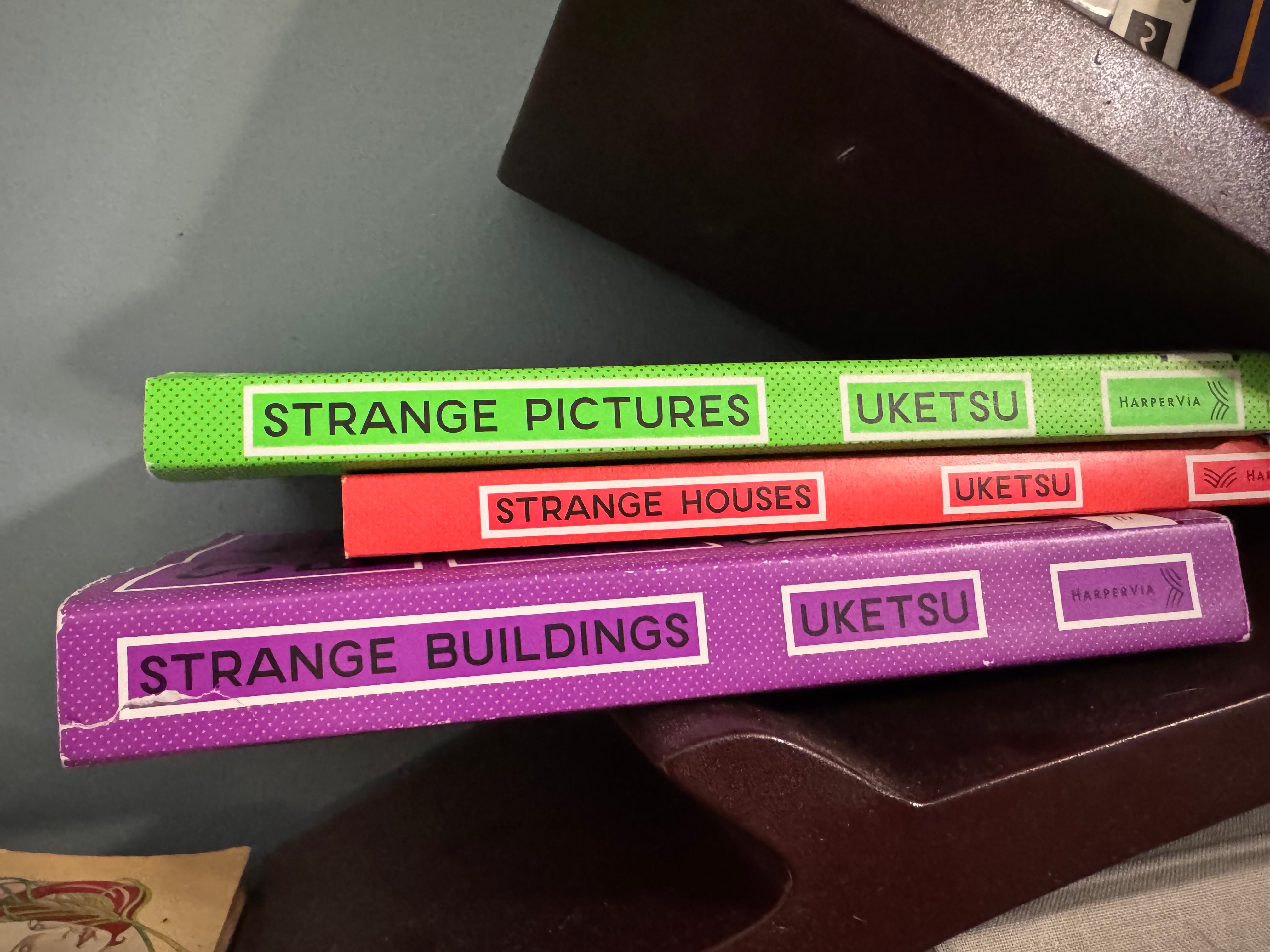
STRANGE PICTURES stands alone and is irresistibly strange and marvelous — I recommend it, as I said, to literally EVERYONE.
But book #2, STRANGE HOUSES, is (dare I say it), TOO STRANGE? It wanders into theories so improbable-seeming that I could hardly accept it. But then I remembered what had prompted me to look for these books in the first place: I wanted to learn about Japanese culture. And so I started to think about the second book in terms of, what would my cultural assumptions have to be for this story to believable?
That made me think about how Japanese people regard the past, and family, and the respect granted elders, and the duty expected of children, and the Shinto-Buddhist realm of magic and superstition and how it weaves its way into a people’s whole way of life. While reading the 2nd book, I remembered what I’d read in other sources, about how there really is a class of people in Japan called Yakuza, and while in Western media Yakuza are portrayed as supercool sexy-badass gangsters, in reality they are a historic underclass, considered unmentionable. An ignorant child who makes eye contact with a Yakuza in a bathhouse and speaks aloud to his father about the strange man’s tattoos brings his family not just embarrassment but FEAR.
The story in STRANGE HOUSES is not about Yakuza, but it is about family status, going back many generations, and how the new generations carry the baggage of curses and ritual deeds designed to countermand curses — and how that is reflected in the construction of a house.
Just as STRANGE PICTURES depends on figuring out puzzles in drawings, STRANGE HOUSES asks you to look for puzzles in floorpans. Something I learned while reading this book is that Japanese people are very quick to demolish buildings. Tear it down and build from new seems to be the default attitude. That allows for purpose-built structures with customized quirks holding hidden meaning.
I do not recommend STRANGE HOUSES to “everyone” — but if you read STRANGE PICTURES (and you should!) I think you will know in the end if you want to try out STRANGE HOUSES or not… it’s weirder, shorter, more particular, and the violence, and the way it’s executed, and the reasons for it, for a Western mind at least, are harder to believe, and require stretching your imagination a bit further.
But then came STRANGE BUILDINGS — this book, to my good fortune, was released in English translation just weeks after I’d finished STRANGE HOUSES. I was surprised (and at first distressed) to discover that it’s basically a continuation of STRANGE HOUSES — but as I kept reading, my distress evaporated. Halfway through the third book, I came to see the second book as a kind of “bridge” — a necessary transition to take one from the first to the third. The third book, STRANGE BUILDINGS, is much, much, much, much, much, much DARKER. I cannot emphasize this enough. And the darkest turn doesn’t come until near the end of the book.
It’s the kind of thing where you’ll remember where you were when you read it. You’ll wonder how you hadn’t known all along. The clues were there, but probably the truth of the matter was just so horrible that your mind refused to go there. You’ll check your heart’s still beating and exhale and wonder if you should still give it to your kid when you finish, like you’d promised. (I did. I had to warn her about it, but I did.)
UKETSU has a 4th book out, and I am awaiting the English translation, which will be titled STRANGE MAPS. I don’t expect it to re-create the magic of STRANGE PICTURES, which remains a stand-alone masterpiece. But I do expect it to continue the weirdness, to shock and disturb, to challenge my puzzle-loving brain, and to take me into the darkest depths of at least one Japanese psyche.
Thanks for reading! Now go buy STRANGE PICTURES!!!

I’ve since seen Spirited Away, The Cat Returns, Princess Mononoke, Howl’s Moving Castle, Kiki’s Delivery Service, and My Neighbor Totoro — my absolute favorite so far is Spirited Away, I could watch that movie on a loop forever <3 but me and the kids have lots more to go!
I lived in Tokyo for six years, and it was the most normal place on earth (just countering the other very othering comment).
Manga and anime are just a tiny slice of Japanese culture, but if you like it, you like it.
I have a Japanese friend who is a university professor specializing in teaching American culture there. He was the only Japanese person I knew who was willing to explain Japanese culture on western terms. I asked him why they tear down new buildings so readily, but preserve other buildings for thousands of years. He told me that they tear down everything built after the war because it's western influenced architecture. It doesn't really have much value because it's not really theirs.
It's been a very long time since I was in Japan, but Tokyo is the WEIRDEST PLACE ON EARTH I have ever been. Cross your fingers.